Chair Tai Chi for Beginners: 4 Gentle Moves to Start
By Steady Steps Tai Chi · Moves adapted from the daily practice of Master YuNing Wang · 14 November 2026
If standing exercise feels like a lot right now, or you simply like having a chair close by, chair tai chi is a friendly place to begin. You sit near the front of a sturdy chair and move your arms, your upper body and later your legs slowly, in time with an easy breath.
This guide explains what chair tai chi is, how to practise it safely, and four beginner moves to start with. Each move also has a standing version with a hand on the chair, for when you're ready.
The four moves at a glance
- Open & Turn: 6 turns in all
- Clap & Lift: 6 rounds
- Open Arms & Reach: 6 rounds
- Seated Knee Lift: 8 lifts in all
About 2 minutes each, or around 10 minutes for all four.
What is chair tai chi?
Tai chi is a Chinese martial art practised as slow, flowing movement. Qigong is a close cousin: short, repeated movements done with relaxed breathing. "Chair tai chi" usually means slow tai chi and qigong-style movements adapted so that you can do them sitting down, or standing with a hand on a chair.
The moves in this guide are qigong-style movements from the practice of Master YuNing Wang, a tai chi teacher, adapted for seated practice. You won't learn a full tai chi form here. You'll learn the habits that every form is built on: moving slowly, breathing easily, and staying upright and relaxed.
Before you start
- Chair: sturdy, with no wheels and ideally no arms. If you can, put its back against a wall so it can't slide.
- How to sit: near the front of the seat, feet flat on the floor about hip-width apart, sitting tall with your shoulders soft.
- Feet: in shoes with a grip, or bare on a non-slip floor.
- The 70% rule: move only as far as feels easy. Smaller is fine.
- The breath rule: breathe slowly and never hold your breath.
Four beginner moves
1. Open & Turn
6 turns in all
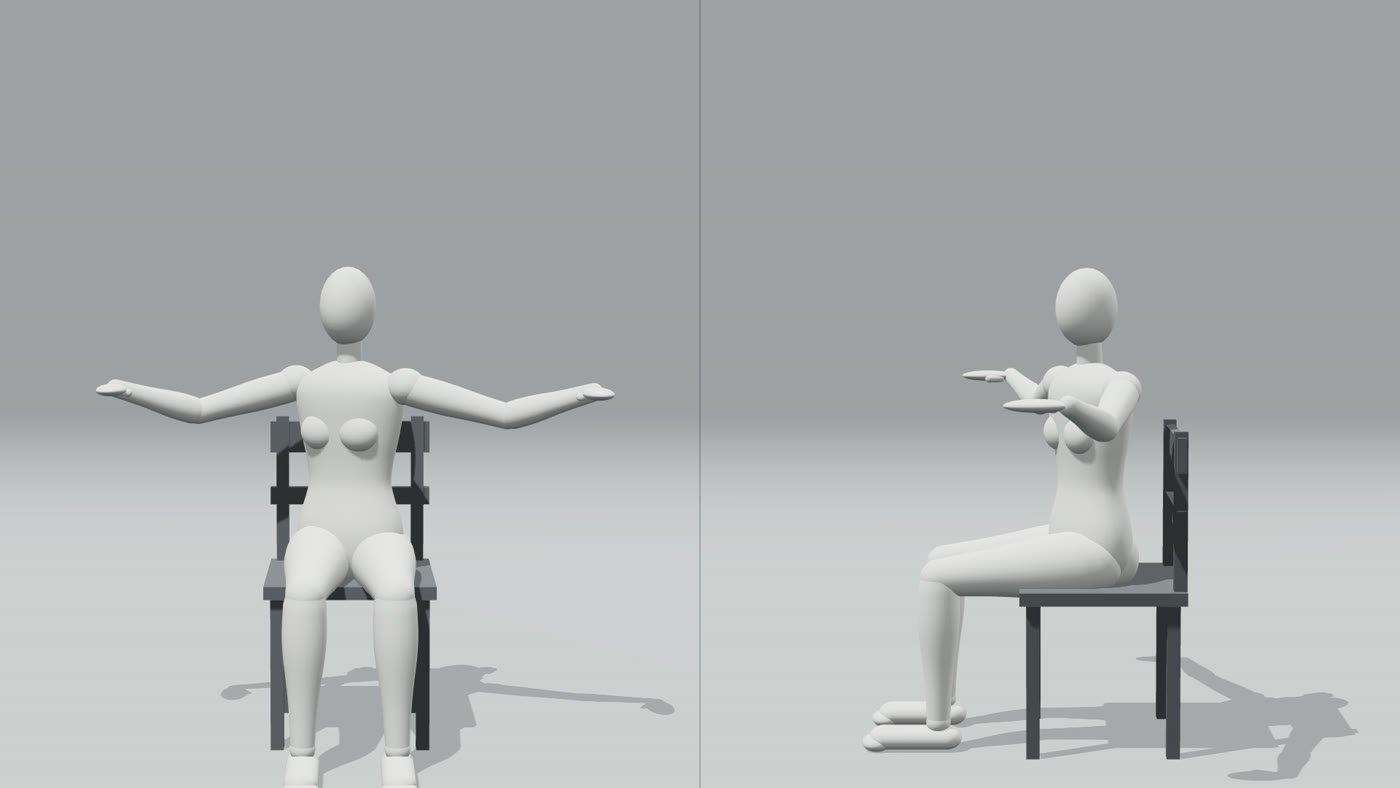
- Sit tall and bring your hands in front of your chest. Breathe in and open both arms out to the sides, palms down.
- With your arms open, turn your head and upper body gently to the left, then back to the middle.
- Turn gently to the right, then back to the middle. That's two turns.
Keep your hips and knees facing forward. A small turn is plenty.
With a chair: stand beside the chair with your right hand on the backrest. Open your left arm and turn a little to the left, 3 times. Then turn around and use the other side.
2. Clap & Lift
6 rounds
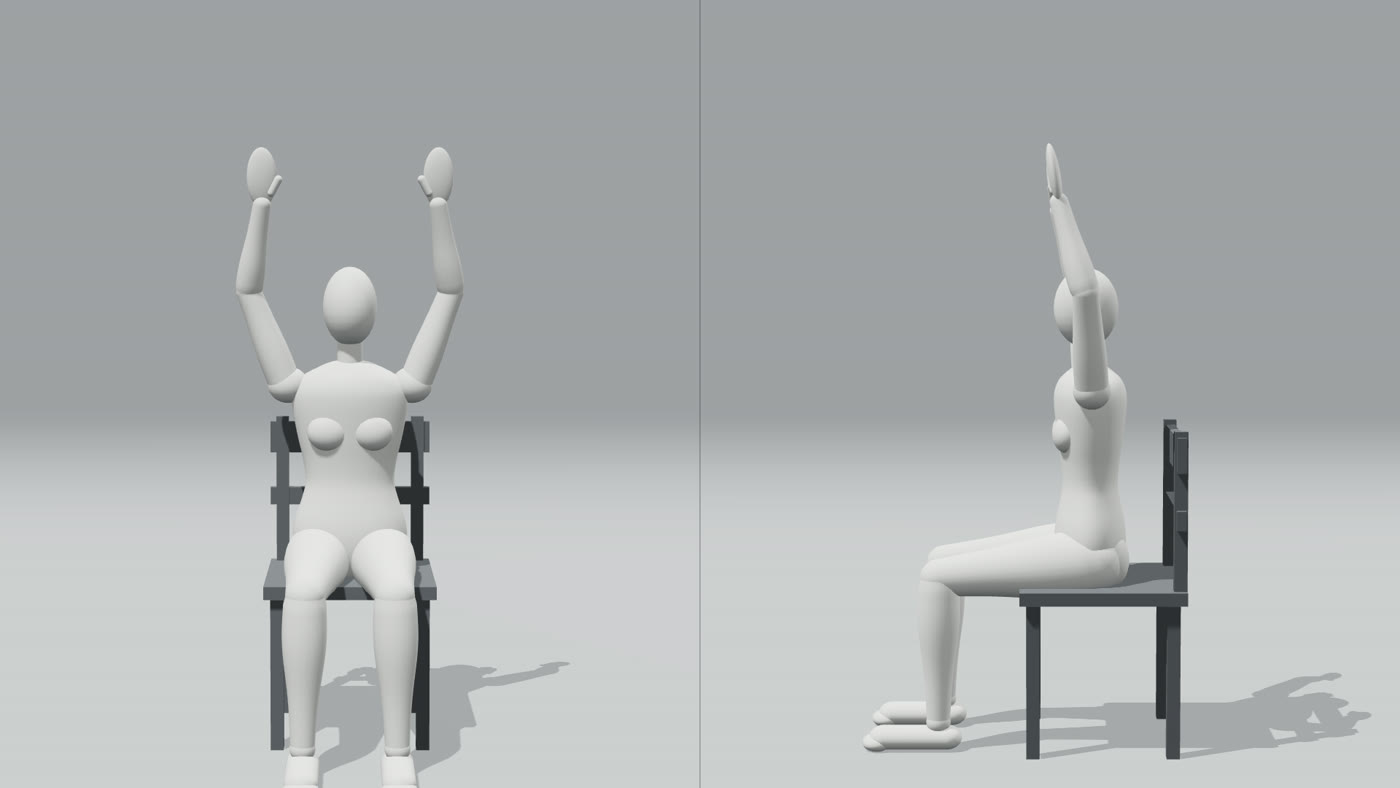
- Bring your palms together in front of your chest, in a soft, quiet clap.
- Turn your palms up and lift both hands slowly toward the ceiling. Forehead height is fine.
- Open your arms out to the sides and let them float down, then press your palms gently down in front of your belly.
Breathe in as your hands rise, and out as they come down.
With a chair: stand behind the chair with your right hand on the backrest. Do the same path with your left hand, 4 times. Then switch hands.
3. Open Arms & Reach
6 rounds
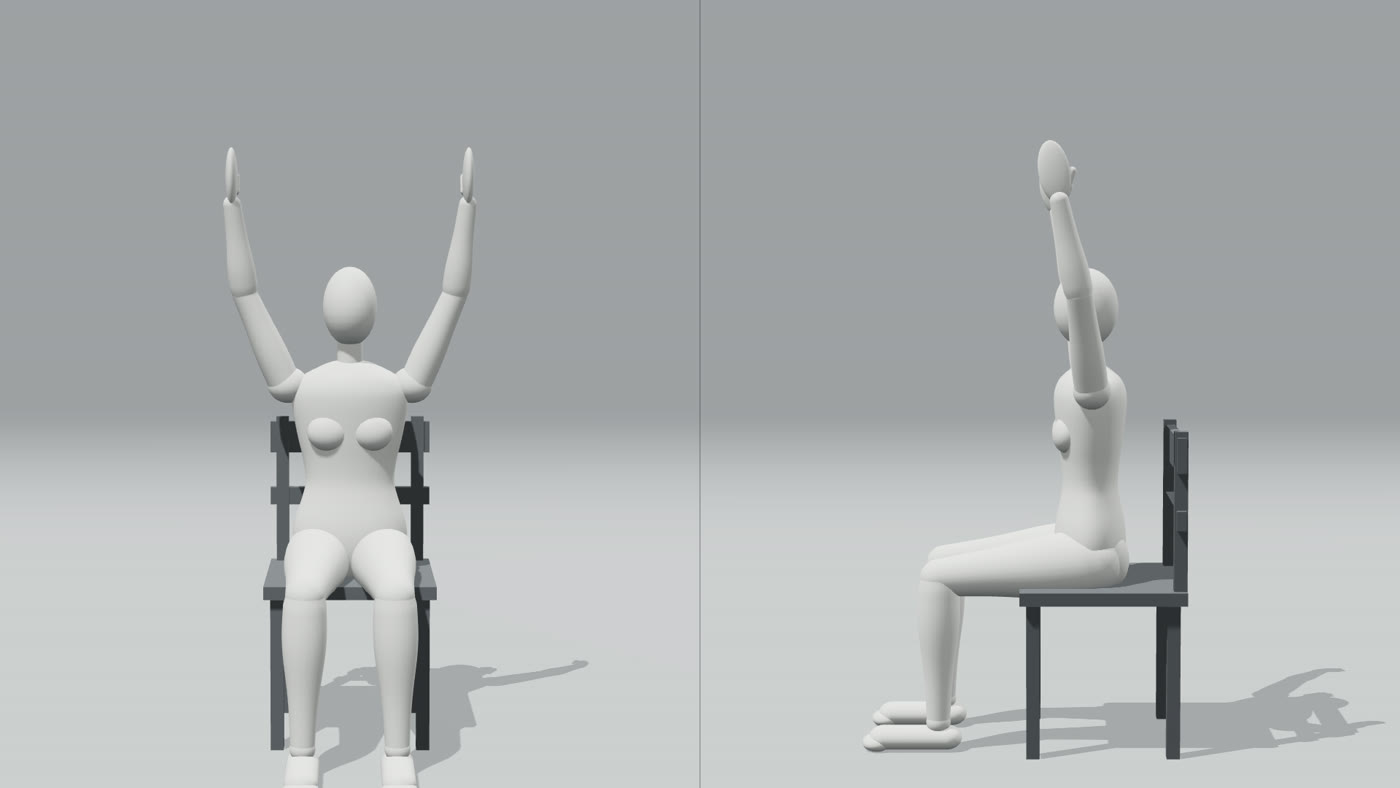
- Sit tall with your hands on your thighs. Breathe in and let both arms float out to the sides, palms down.
- Keep going and let them rise above your head, palms facing in.
- Breathe out and let your arms float back down the same way.
If your shoulders feel tight, stop at shoulder height. That's plenty.
With a chair: stand behind the chair with your right hand on the backrest. Let your left arm float out, up and down, 4 times. Then switch arms.
4. Seated Knee Lift
8 lifts in all, left and right
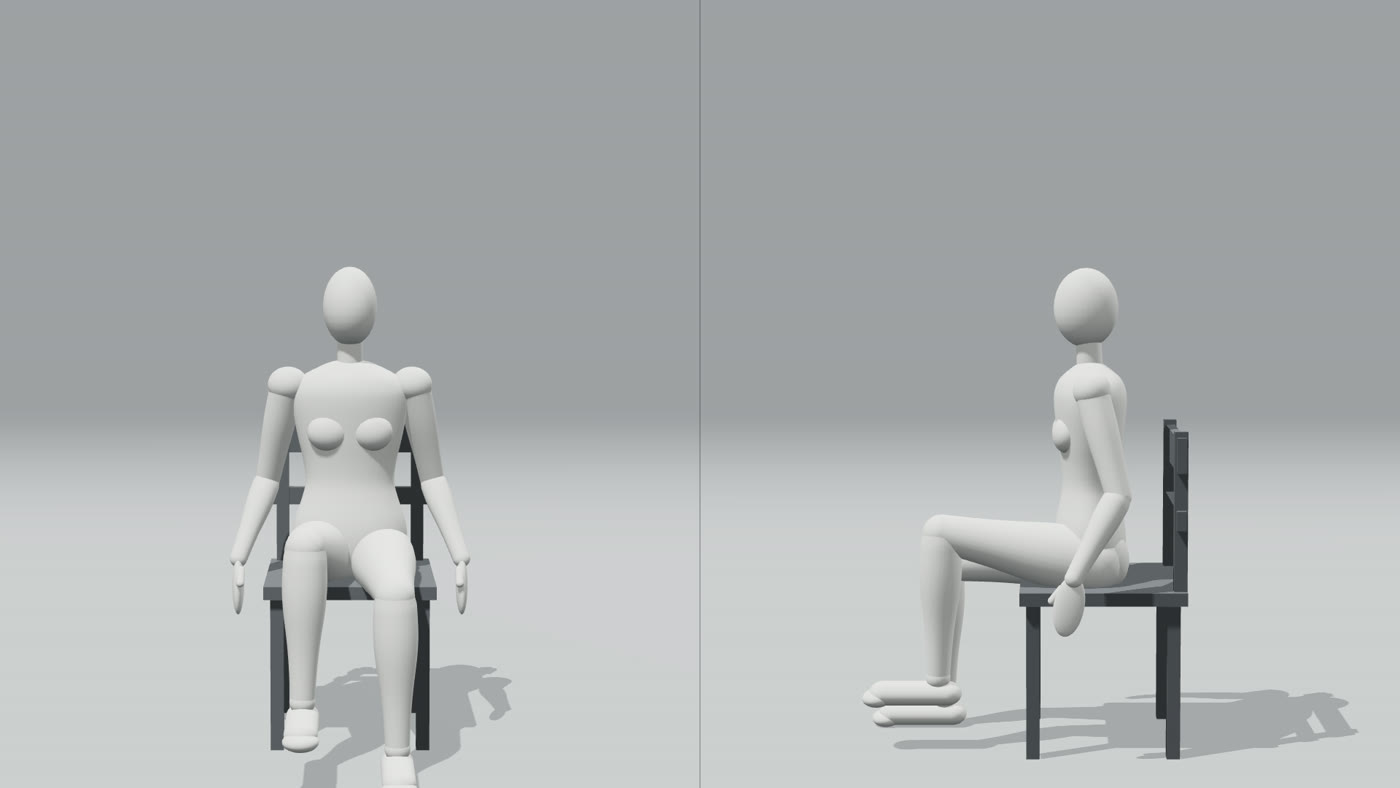
- Sit near the front of the chair and hold the sides of your seat lightly with both hands. Sit tall.
- Slowly lift your left foot a few inches off the floor; your knee rises with it. Pause, then set it down softly.
- Now the right foot.
Breathe out as the foot lifts. Keep your back tall, and don't lean back to lift higher.
With a chair: stand behind the chair with both hands on the backrest. Lift one knee just until the foot leaves the floor, then set it down. Alternate feet, 4 times.
Pictures show a 3D model, not a real person.
A simple first week
Learning one move at a time is easier than learning all four at once. Start each day with a few slow breaths, sitting tall with your hands on your thighs.
| Day | Practice |
|---|---|
| 1 | Open & Turn |
| 2 | Open & Turn, then Clap & Lift |
| 3 | Clap & Lift, then Open Arms & Reach |
| 4 | Seated Knee Lift |
| 5–7 | All four in order, about 10 minutes |
Missing a day is fine. Just pick up where you left off, and keep the same time of day if you can, for example right after your first cup of tea.
Common beginner mistakes
- Going too fast. Slower is the point. If you're counting quickly, halve the speed.
- Lifting too high. Shoulder height is enough for every arm move here.
- Holding your breath. Let the breath follow the movement, or simply breathe normally.
- Leaning back. In the knee lift especially, keep your back tall and make the lift smaller instead.
- Twisting from the hips. In Open & Turn, your hips and knees stay facing forward; only the upper body turns.
When to stop
Stop and rest if you feel dizzy or light-headed, unusually short of breath, chest discomfort, sharp or increasing pain, or unsteady.
Check with your doctor before starting if you've recently had surgery, a fall or a fracture, a joint replacement or unexplained dizziness, or if you've been told to limit activity.
Common questions
Is chair tai chi real tai chi?
It uses the same slow pace, relaxed breathing and upright posture, but it isn't a full tai chi form. Think of it as a gentle starting point. Many people stay with the seated version, and that is a complete practice on its own.
Do I need any experience?
No. Every move here is written for complete beginners, and you can stay seated the whole time.
What if I want something shorter?
Try our 5-minute seated qigong routine: four different moves you can do before breakfast.
Is this medical advice?
No. Steady Steps is an educational movement guide. It does not diagnose, treat, cure or prevent any condition.
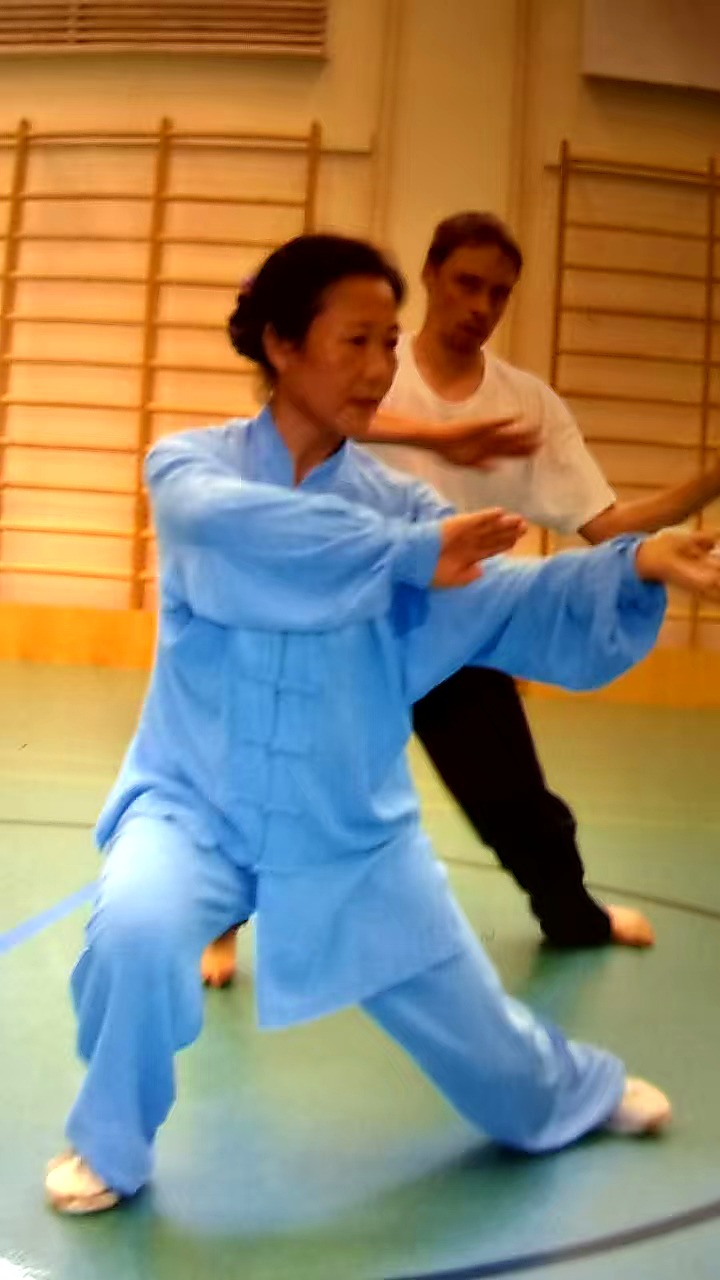
Who designed the moves: YuNing Wang holds Chinese Wushu 6th Duan and is a National-level Social Sports Instructor in Tai Chi (China). That is a fitness instruction credential, not a medical license. The moves are adapted from her own daily practice, with seated options added.
Follow along on video
All four moves are lessons in Gentle Morning Qigong with Master YuNing: 8 short video lessons, each with a seated version and a standing-with-a-chair version, for a one-time $29 with a 14-day refund.
Not ready for a course? The free 7-day plan is an 11-page large-print PDF with one gentle move a day.